
 Sea Fish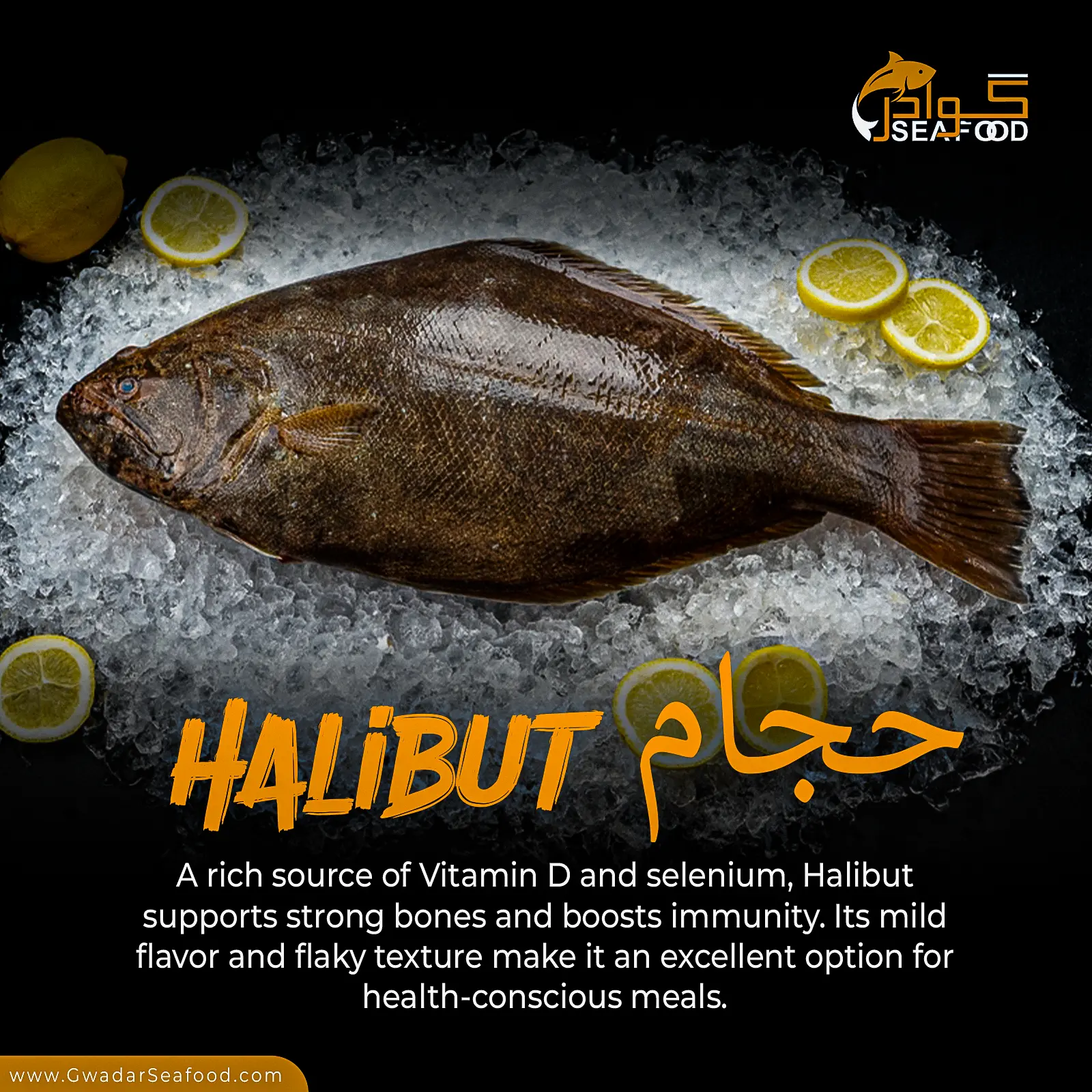
Buy Fresh Halibut (Hajjam) fish online in Karachi, Lahore, lslamabad & Across Pakistan — Seafood Home Delivery in Karachi.
Introduction
Halibut, locally known as Hajjam, is one of the most prized flatfish species in the world—renowned for its mild taste, lean white flesh, and large boneless fillets. Unlike oily, bold-flavored fish like Bangda or Rawans, Halibut delivers a gentle, buttery flavor that pairs effortlessly with spices, herbs, and continental-style marinades.
While wild Halibut is native to cold northern seas (Pacific and Atlantic), a local cousin known as Arabian Halibut (Psettodes erumei) is caught seasonally along Pakistan’s coastline, especially around Gwadar, Pasni, and Ormara. I
Deep Dive: Habitat, Feeding & Behavior
Halibut are benthic flatfish, living on sandy or muddy bottoms up to 100 m deep in coastal waters and estuaries, making them suitable for catch via bottom trawl and gillnets.
They are right-eyed flounders, with a mottled brown upper side and pale underbelly—providing camouflage in coastal seabeds.
Spawning & Sustainability
Though most data is from northern halibut species, female halibut may lay hundreds of thousands to millions of eggs, with spawning typically in winter or deep offshore areas. Mature females often exceed 10–12 years in age before first spawn.
International IUCN categories vary by species: Pacific halibut (Least Concern), Atlantic halibut (Near Threatened) due to slower growth and overfishing.
Why Halibut (Hajjam) Is Worth a Try
Large boneless fillets – Excellent for grilling, BBQ, steaks, and healthy meals
Mild, non-fishy flavor – Great for kids, curry, or western-style prep
Minimal bones – Great for easy handling, storage, and quick prep
Absorbs masala well – Works with both desi and continental recipes
Mild and elegant flavor—perfect for diners who shy from strong fish scents
Firm, moist white meat that flakes beautifully and stays juicy
Lean protein (~1–2 g fat per 100 g), rich in omega-3, selenium, vitamins B12, B6, and phosphorus
Names & Taxonomy
| Field | Value |
|---|---|
| Common Name | Halibut |
| Local Name | Hajjam (also sometimes called “flatfish”) |
| Scientific Name | Psettodes erumei / Paralichthys spp. (regional variant) |
| Family | Pleuronectidae / Paralichthyidae |
| Order | Pleuronectiformes |
| Class | Actinopterygii |
| Phylum | Chordata |
Note: There are multiple halibut-like flatfish in Pakistani waters—our Hajjam is a regional variant with traits similar to American/Atlantic halibut in texture and yield.
Sourcing & Catching
Caught in: Offshore coastal waters of Gwadar, Ormara, and Pasni
Depth: Typically 50–200 meters
Habitat: Coastal Arabian Sea waters, sandy seabeds near Sindh and Balochistan
Gear: Bottom trawls and gillnets—standard methods for capturing benthic species such as Halibut
Physical Traits & Texture
Broad, flat oval-shaped body, with both eyes on one side
Holds shape when grilled or seared—no flaking or sogginess
Flat, diamond-shaped body with dark upper side and pale underbelly
Cutting Yield Table
| Cut Style | Approx. Yield | Ideal For |
|---|---|---|
| Whole (cleaned) | ~100% | Baking or full-body grill |
| Gutted only | ~85% | Curry or heavy masala |
| Headless & Gutted | ~70% | Bone-in steaks |
| Boneless Steaks | ~50–55% | BBQ, grill, clean lunch portions |
| Skinless Fillets | ~40–45% | Western recipes, lean diet prep |
Freshness Tips
Skin should look firm, without blotches or dryness
Flesh should be white, springy, and not smell “fishy”
Shouldn’t drip—moist but not waterlogged
Eyes (if whole): clear, not cloudy
Our quality checks guarantee your Hajjam arrives fresh—or it doesn’t leave our dock.
Storage Guidelines
Chill below 4 °C, consume within 1–2 days for optimal freshness
Freeze boneless portions only (airtight) for up to 4 weeks
Avoid refreezing after thawing to maintain flaky texture
Nutrition Highlights (per 100 g, raw)
| Nutrient | Approx. Value |
|---|---|
| Protein | ~20–22 g |
| Calories | ~110–125 kcal |
| Total Fat | ~1–2 g |
| Omega-3 | ~0.3–0.4 g |
| Vitamin D | ~500–600 IU |
| Vitamin B12 | ~1.2 µg |
| Selenium | ~28–32 µg |
| Calcium & Iron | Moderate |
Source: USDA, FAO nutrition data for flatfish and halibut species
Similar Fish You May Like
Flathead (Kukkar): Softer texture, less firm but sweeter
Rawans (Indian Salmon): Mild, meaty, thicker flakes
Reviews
There are no reviews yet.