
 Sea Fish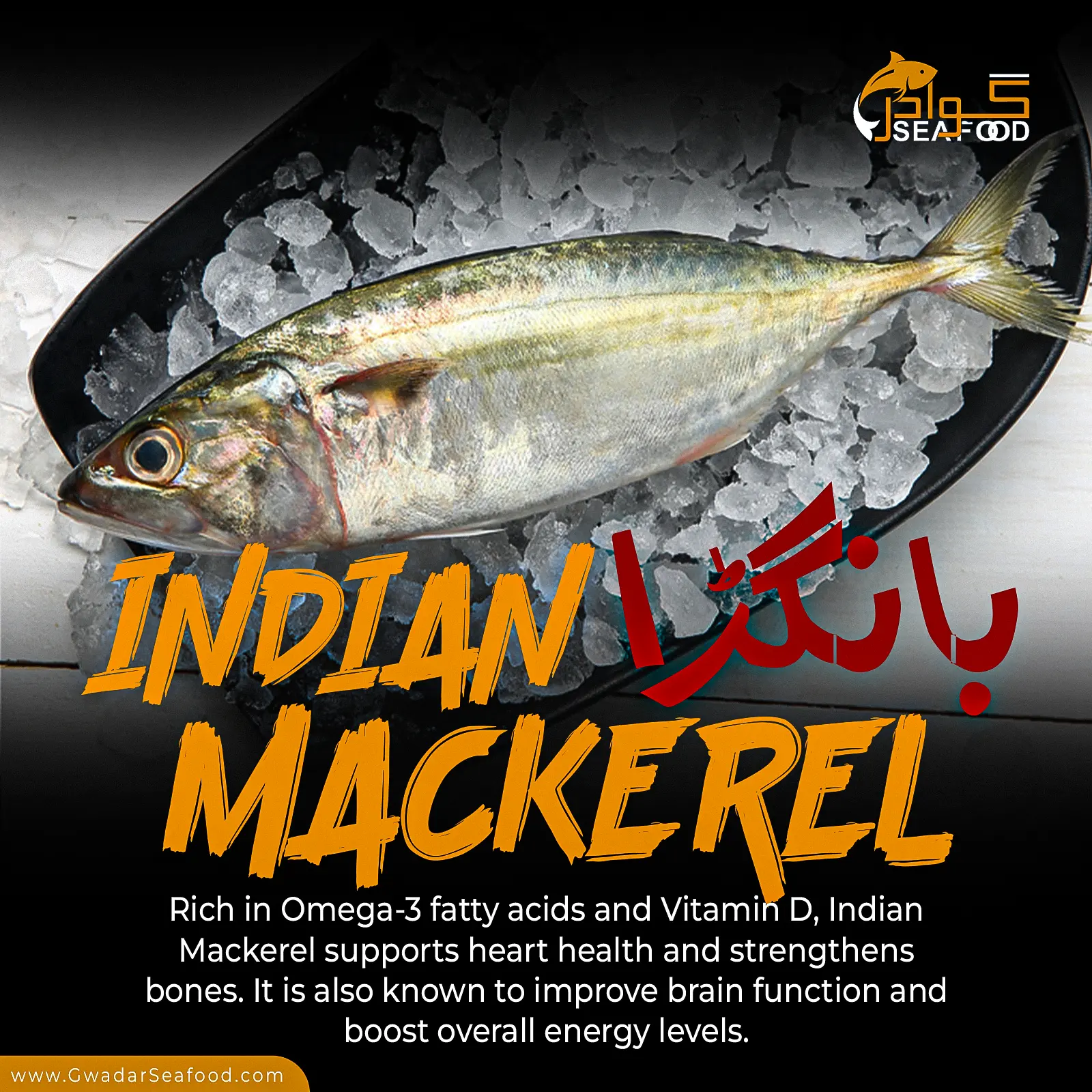
Buy Fresh Indian Mackerel (Bangda) fish online in Karachi, Lahore, lslamabad & Across Pakistan — Seafood Home Delivery in Karachi.
Introduction
Indian Mackerel—locally called Bangda/Bangra—is known for its rich, oily flesh and bold briny taste. While the fish is prized across South Asia for its flavor and affordability, it’s not entirely boneless. Bangda contains many small pin bones embedded in the flesh, especially near the spine.
These tiny bones are expected in desi households and often carefully removed during cooking. Many cooks in Karachi, Goan and Bengali kitchens slice or fillet the fish first, removing pin bones by hand, so that the final dish is safe but still retains maximum taste. At GwadarSeafood, every Bangda is processed fresh, with guidelines and cut options (like headless gutted slices) to give you maximum control while cooking.
Deep Dive: Habitat, Feeding & Migration
Rastrelliger kanagurta thrives in shallow coastal waters (20–200 m depth), especially turbid, plankton-rich areas like bays and harbors. It moves in dense schools and is highly active during feeding periods. The fish feed primarily on plankton and small crustaceans, shifting from phytoplankton as juveniles to macroplankton (e.g., shrimp larvae) as they mature
🧬 Spawning & Conservation Snapshot
Spawning occurs year-round, with peak activity in April and a minor pulse in October–November in Indian waters
Fish mature at approximately 20 cm length, with females releasing 26,000–108,000 eggs per season depending on region
IUCN status: Data Deficient, but regional studies suggest sustainable to moderate exploitation, with spawning potential ratio (SPR) around 57% in monitored zones, indicating responsible harvesting
Why You’ll Love Bangda
Full-on ocean flavor that stands up to bold spices
Rich oil content keeps meat moist and flavorful
Clean, firm flesh works well for both minutes & slow-cook recipe
Packs good amounts of omega-3s, protein, B12, vitamin D, and selenium
Affordable and widely available during peak catch months
Loved in Karachi, Bengali, Goan, and South Indian cuisines
📚 Names & Scientific Classification
| Field | Value |
|---|---|
| Common Name | Indian Mackerel |
| Local Names | Bangda / Bangra / Bangdi |
| Scientific Name | Rastrelliger kanagurta |
| Family | Scombridae |
| Order | Scombriformes |
| Class | Actinopterygii |
| Phylum | Chordata |
Sourcing & Ethical Catching
Where: Arabian Sea coast of Sindh, Balochistan, and Gwadar
Gear: Responsible methods like gillnets, hook lines, seines, and cast nets
Handling: Onshore processing same day—never frozen on boat, never dipped in preservatives.
Seasonality: Peak availability from September to March in local waters
Physical Traits & Texture
Up to ~35 cm long (typically ~25 cm), torpedo-shaped body with blue-green back and silver belly
Fresh specimens may show golden longitudinal stripes and a black spot near the pectoral fin
Meat is firm, oily, with a slightly fibrous texture—holds shape under oil or high heat
Size Guide & Cutting Yields
| Fish Size | Best For |
|---|---|
| 120–160 g | Quick fry, tawa slices |
| 160–250 g | Curry cuts, roast-side slices |
| 250 g+ | Grill steaks, thick-cut recipes |
Cutting Yield Table
| Cut Style | Yield % | Best For |
|---|---|---|
| Whole (cleaned) | ~100% | Roast, curries, intact fish fry |
| Gutted only | 80–85% | Curry or marinated portions |
| Headless + Gutted | ~70% | Tawa-style fry or BBQ |
| Bone-in slices | 60–65% | Pan fry, masala style |
| Boneless fillets | ~35–40% | Fish cakes / roll—rare due to bone structure |
Data verified from multiple local suppliers and industry standards
Cooking Inspirations – Local & Global Flair
Karachi-style Masala Fry: Marinate slices in garlic, chili, lemon, and besan; shallow fry until golden
Bengali Shorshe: Bangda in mustard-coconut gravy with kalonji and green chilies
South Indian Curry: Tamarind, coconut, curry leaves with spices
Whole Fish Grill: Coriander-cumin marinade with lemon and olive oil
Fish Rice Bowl: Flaked fried Bangda over garlic rice with achar
Freshness Checklist
Eyes: bright and clear
Skin: shiny, intact, no dull patches
Belly: intact without oil leakage or damage
Flesh: firm with spring-back feel
Smell: clean sea scent—never sour or strong fishy aroma
At GwadarSeafood, we refuse shipments that don’t pass these tests—freshness is non-negotiable.
Storage & Handling
Refrigerate: under 4 °C, consume within 1–2 days
Freeze: airtight, up to 4 weeks
Marinated freeze: slice raw with spices and freeze for quick midweek cooking
Avoid refreezing post-thaw to protect texture and oils
Seasoning & Pairing Accents
Masalas: garlic paste, red chili, turmeric, cumin, lemon
Sides: lemon rice, garlic naan, pickled or fresh spicy chutneys
Refreshers: mint lassi, cool raita, lemon soda to balance the rich flavors
Who Should Order Bangda?
Bold seafood fans craving real coastal flavor
Home cooks making traditional Karachi, Bengali, or Konkani seafood dishes
Families and preppers wanting oily, flavorful protein on a budget
Health-conscious eaters looking for omega‑3 rich, natural nutrition
Nutrition Snapshot (per 100g raw)
| Nutrient | Value |
|---|---|
| Calories | ~180–205 kcal |
| Protein | ~19–21 g |
| Fat (omega‑3 rich) | ~10–14 g |
| Iron | ~1.5 mg |
| Zinc | ~0.6 mg |
| Vitamin B12 | ~2.5 µg |
| Vitamin D | ~250–640 IU |
| Selenium | ~36–44 µg |
Data estimated from multiple regional and global nutrition sources
Similar Fish to Explore
Luar (Sardine): Crisp, small, extremely oily—perfect for quick fry
Reviews
There are no reviews yet.