
 Sea Fish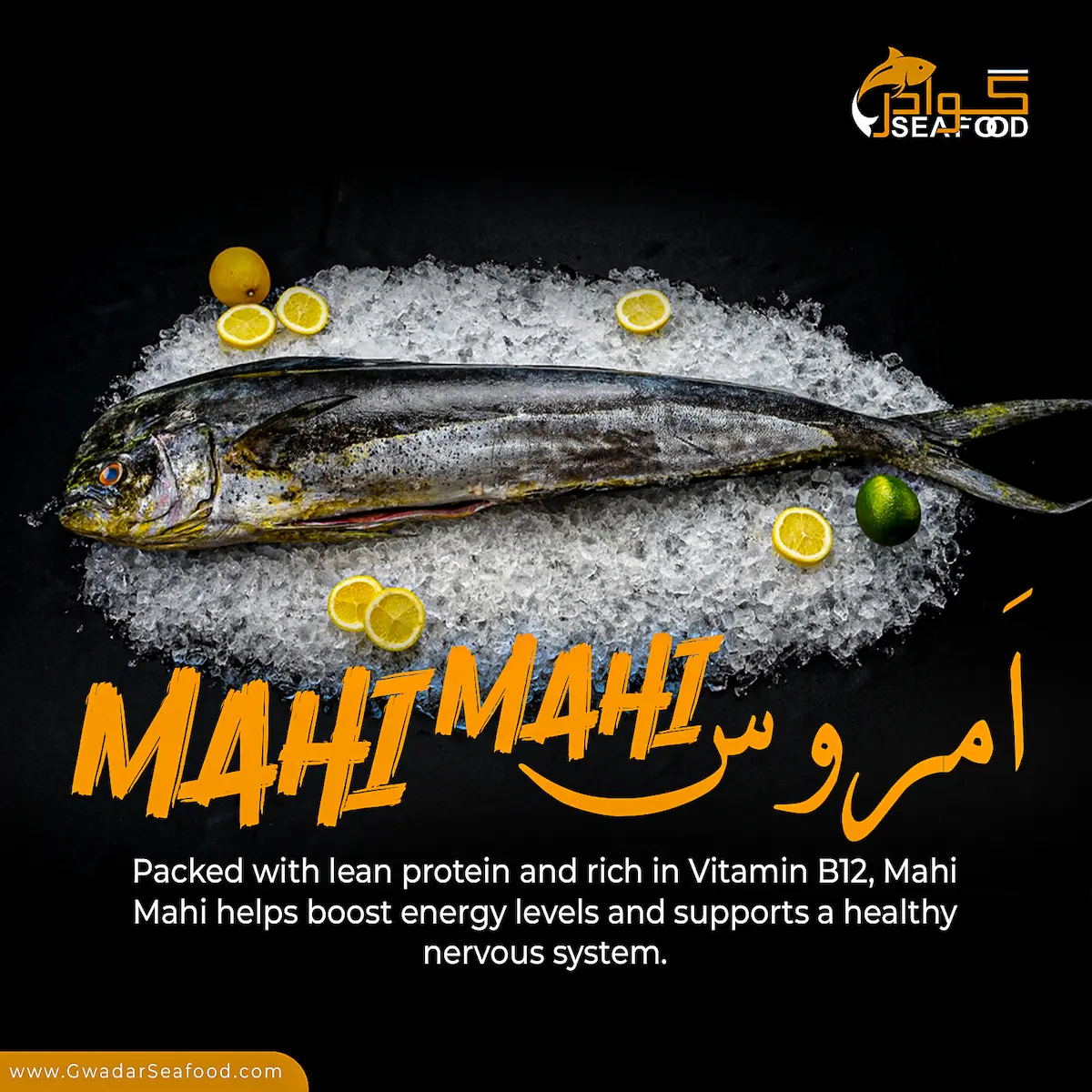
Buy Fresh Mahi Mahi (Amloshk) Fish Online in Karachi
Buy fresh Mahi Mahi (Amloshk) fish online in Karachi, Lahore, Islamabad & across Pakistan with reliable seafood home delivery. At Gwadar Seafood, our Mahi Mahi is sourced fresh, hygienically handled, and delivered without chemical treatments or long-term freezing.
Introduction
Mahi Mahi, also known as Dorado or Common Dolphinfish (Coryphaena hippurus), is a fast-growing, vibrant marine fish found in tropical and subtropical waters. Recognized for its golden-yellow sides and blue-green back, it is highly valued for its firm texture and slightly sweet taste.
It is widely used in grilling, baking, and healthy seafood recipes due to its lean meat and clean flavor.
Ecological Role in the Ocean
Mahi Mahi are pelagic fish, meaning they inhabit the open ocean rather than coastal areas. As apex predators, they feed on a wide variety of prey, including smaller fish, squid, and crustaceans. Their hunting behavior helps regulate the populations of these species, contributing to the overall health and balance of the marine food web. Additionally, Mahi Mahi are often associated with floating objects like Sargassum seaweed, which provide shelter and feeding opportunities for juvenile fish.
Habitat, Behavior & Diet
Habitat: Mahi Mahi are found in tropical and subtropical waters worldwide, including the Atlantic, Indian, and Pacific Oceans. They prefer offshore areas with floating debris or seaweed, which provide shelter and feeding grounds.
Behavior: Known for their speed and agility, Mahi Mahi can reach speeds up to 50 knots (57.5 mph). They are also highly migratory, often moving with ocean currents and following prey availability.
Diet: Mahi Mahi are carnivorous, feeding on a variety of prey including flying fish, squid, crabs, and smaller pelagic fish. Their diet varies based on availability and location
Reproduction & Conservation
Reproduction: Mahi Mahi are known for their rapid growth and early sexual maturity. They can reach sexual maturity within 4 to 5 months and spawn multiple times per year, producing between 80,000 and 1,000,000 eggs per event. Spawning typically occurs in warm ocean currents, and their larvae are commonly found in association with floating debris.
Conservation Status: While Mahi Mahi populations are currently stable, they are subject to fishing pressures. Sustainable fishing practices and effective management are essential to ensure their populations remain healthy.
Physical Traits & Texture
Shape: Mahi Mahi have a compressed, elongated body built for speed and agility. They possess a prominent, long dorsal fin that extends from the head almost to the tail fin. Their caudal fins and anal fins are sharply concave.
Flesh: The meat of the Mahi Mahi is firm, white, and slightly sweet, offering a rich flavor that is highly regarded in culinary circles. It holds up well to various cooking methods, including grilling, baking, and broiling.
Bones: Mahi Mahi have a relatively simple skeletal structure with few bones, making them easier to fillet compared to other fish species. However, care should still be taken during preparation to ensure all bones are removed.
Why Mahi Mahi (Amloshk) Is a Good Choice
- Lean source of protein
- Low in fat compared to many fish
- Firm texture ideal for grilling and baking
- Mild, slightly sweet flavor
- Suitable for healthy diets
Cutting Options & Approximate Yields
| Cut Style | Approx. Yield | Ideal Use |
|---|---|---|
| Whole (uncleaned) | 100% | Whole roasting or grilling |
| Gutted | 85% | Steaks or fillets |
| Headless & Gutted | 75% | Slices or fillets |
| Boneless Fillets | 45% | Grilling, pan-searing, or baking |
Cooking Ideas
- Grilled Mahi Mahi steaks with herbs and lemon
- Baked fillets with vegetables
- Fish tacos with fresh toppings
- Pan-seared fillets with garlic butter
If you want to explore more ways to cook Mahi Mahi (Amloshk), you can check detailed recipes in NOAA FISHERIES
Tips for Selecting Fresh Mahi Mahi
Eyes: Clear and bright, not cloudy.
Flesh: Firm and slightly elastic to the touch, not mushy.
Smell: Fresh, ocean-like scent; avoid fishy or sour odors.
Skin: Smooth and shiny, with no discoloration or dryness.
Storage Tips
Refrigeration: Keep at temperatures below 4°C (40°F) and consume within 1–2 days.
Freezing: Store in airtight packaging for up to 3 months.
Thawing: Thaw in the refrigerator overnight; avoid thawing at room temperature.
Nutrition Highlights (Approx. per 100g, raw)
| Nutrient | Amount |
|---|---|
| Calories | ~85 kcal |
| Protein | ~18.5 g |
| Total Fat | ~0.7 g |
| Carbohydrates | 0 g |
| Sodium | ~40–50 mg |
| Omega-3 Fatty Acids | ~0.2 g |
| Vitamin D | ~0 µg |
| Vitamin B12 | ~1.0–1.5 µg |
| Calcium | ~15–19 mg |
| Iron | ~1.1–1.5 mg |
| Potassium | ~416–533 mg |
Source: FatSecret Platform API. Nutritional values are approximate and may vary based on size and source.
Need Something Similar?
Yellowtail (Seriola lalandi)
Reviews
There are no reviews yet.