
 Sea Fish
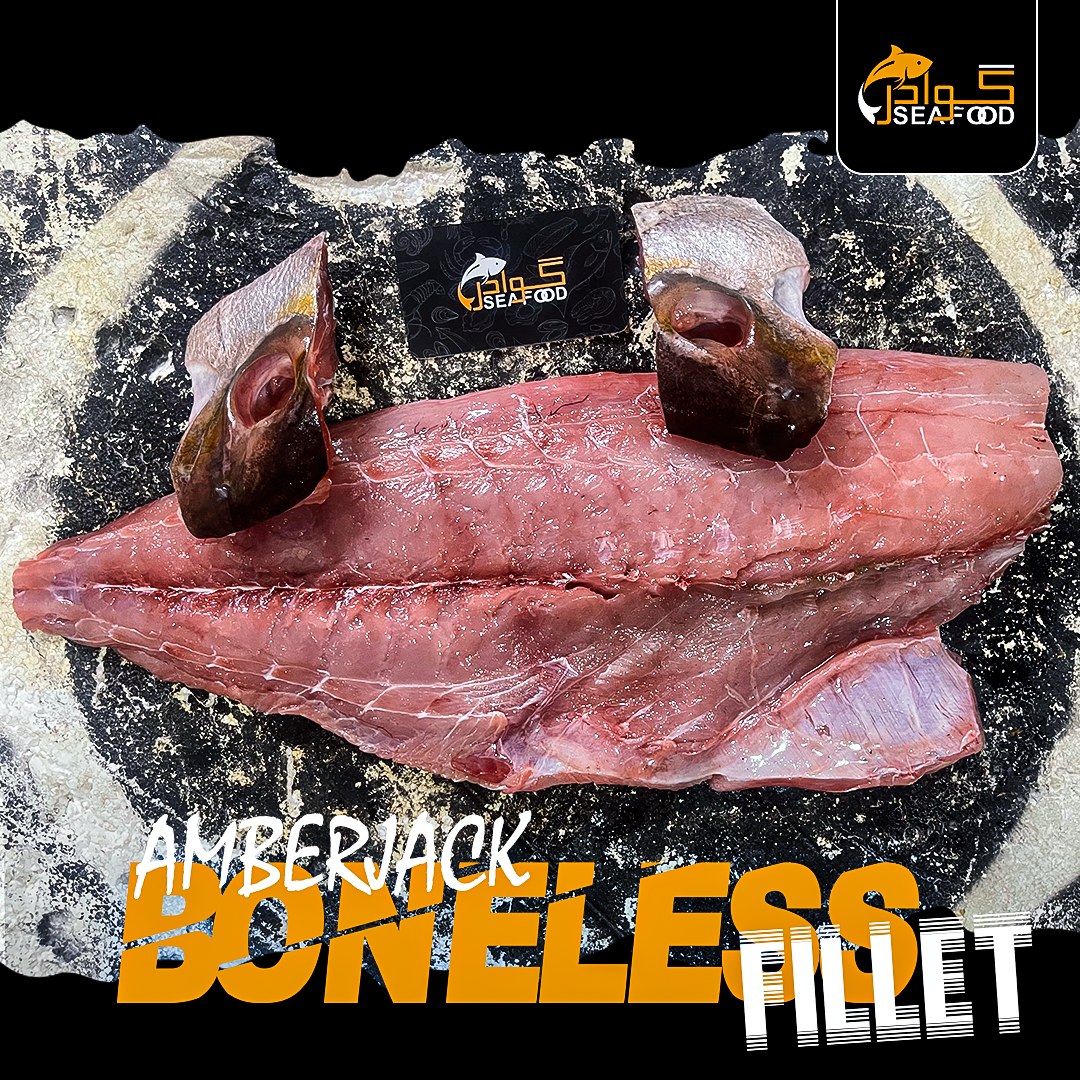
Buy Fresh Amberjack Fish (Saafi) Online in Karachi
Buy fresh Amberjack (Saafi) fish online in Karachi, Lahore, Islamabad & across Pakistan with reliable seafood home delivery. At Gwadar Seafood, our Amberjack is sourced fresh, hygienically handled, and delivered without chemical treatments or long-term freezing.
Introduction
The Greater Amberjack (Seriola dumerili) is a powerful marine fish from the Carangidae family, known for its firm texture and rich flavor. It has a streamlined body with a distinctive amber stripe along its side and is widely valued in both commercial and recreational fishing.
Amberjack is commonly used in grilling, baking, and pan-searing due to its meaty flesh and ability to hold shape during cooking.
Ecological Role in the Ocean
Amberjacks are apex predators in their habitat, feeding on a diverse diet that includes squid, crustaceans, and smaller fish such as sardines and scads. Their presence helps regulate the populations of these species, ensuring a balanced ecosystem. Juvenile Amberjacks often seek refuge near floating objects or sargassum mats, while adults prefer deeper waters, typically ranging from 18 to 72 meters, and can be found around reefs, drop-offs, and shipwrecks.
Habitat, Behavior & Diet
Habitat: The Greater Amberjack is typically found in offshore waters, preferring deep reefs, drop-offs, and wrecks. Juveniles often inhabit coastal areas and are associated with floating objects like Sargassum mats. As they mature, they move to deeper waters, usually at depths ranging from 18 to 72 meters, though larger individuals can be found at depths up to 360 meters.
Behavior: These fish are known for their strength and speed, making them formidable predators and challenging targets for anglers. They often hunt in schools, coordinating their movements to herd and capture prey efficiently.
Diet: Amberjacks are opportunistic feeders, preying on a variety of smaller fish species, including bigeye scad and sardines, as well as cephalopods and crustaceans. Their diet varies depending on the availability of prey in their habitat.
Reproduction & Conservation
Amberjack reach maturity at around 3–4 years. Spawning occurs primarily from March to June, with females capable of releasing between 18 and 59 million eggs during a single spawning season.
The species is currently classified as stable, but responsible fishing practices remain important.
Why Amberjack (Saafi) Is a Good Choice
- High in protein and essential nutrients
- Firm, meaty texture
- Slightly rich flavor compared to mild fish
- Ideal for grilling, baking, and frying
- Suitable for a variety of cuisines
Physical Traits & Texture
Shape: Amberjacks possess a robust, torpedo-shaped body designed for speed and agility. Their coloration includes a bluish-grey back, silvery-white belly, and a distinctive amber stripe along the side.
Flesh: The meat of the Amberjack is firm, white, and slightly oily, offering a rich flavor that is highly regarded in culinary circles. It holds up well to various cooking methods, including grilling, baking, and broiling.
Bones: Amberjacks have a complex bone structure that can pose challenges during filleting. The bones are dense and may be difficult to remove entirely, requiring careful attention to avoid injury. Injuries from handling Amberjacks, such as puncture wounds from their sharp fins, can lead to infections if not properly treated .
Size Options
Small: 2–5 kg (ideal for grilling or pan-searing).
Medium: 5–10 kg (suitable for steaks or baking).
Large: 10 kg+ (perfect for whole roasting or large gatherings).
Cutting Options & Approximate Yields
| Cut Style | Approx. Yield | Ideal Use |
|---|---|---|
| Whole (uncleaned) | 100% | Whole roasting or grilling |
| Gutted | 85% | Steaks or fillets |
| Headless & Gutted | 75% | Slices or fillets |
| Boneless Fillets | 45% | Grilling, pan-searing, or baking |
Cooking Ideas
- Grilled Amberjack steaks with herbs
- Baked fillets with vegetables
- Fish tacos with fresh toppings
- Pan-seared fillets with garlic butterf
Tips for Selecting Fresh Amberjack
Eyes: Clear and bright, not cloudy.
Flesh: Firm and slightly elastic to the touch, not mushy.
Smell: Fresh, ocean-like scent; avoid fishy or sour odors.
Skin: Smooth and shiny, with no discoloration or dryness.
Storage Tips
Refrigeration: Keep at temperatures below 4°C (40°F) and consume within 1–2 days.
Freezing: Store in airtight packaging for up to 3 months.
Thawing: Thaw in the refrigerator overnight; avoid thawing at room temperature.
Nutrition Highlights (Approx. per 100g, raw)
| Nutrient | Amount |
|---|---|
| Calories | 146 kcal |
| Protein | 23.1 g |
| Total Fat | 5.24 g |
| Saturated Fat | 1.28 g |
| Cholesterol | 55 mg |
| Sodium | 39 mg |
| Carbohydrates | 0 g |
| Sugars | 0 g |
| Dietary Fiber | 0 g |
| Omega-3 | 0.238 g |
| Calcium | 15 mg |
| Iron | 0.641 mg |
| Potassium | 952.4 mg |
Source: NOAA Fisheries Nutritional values are approximate and may vary based on size and source.
Reviews
There are no reviews yet.